

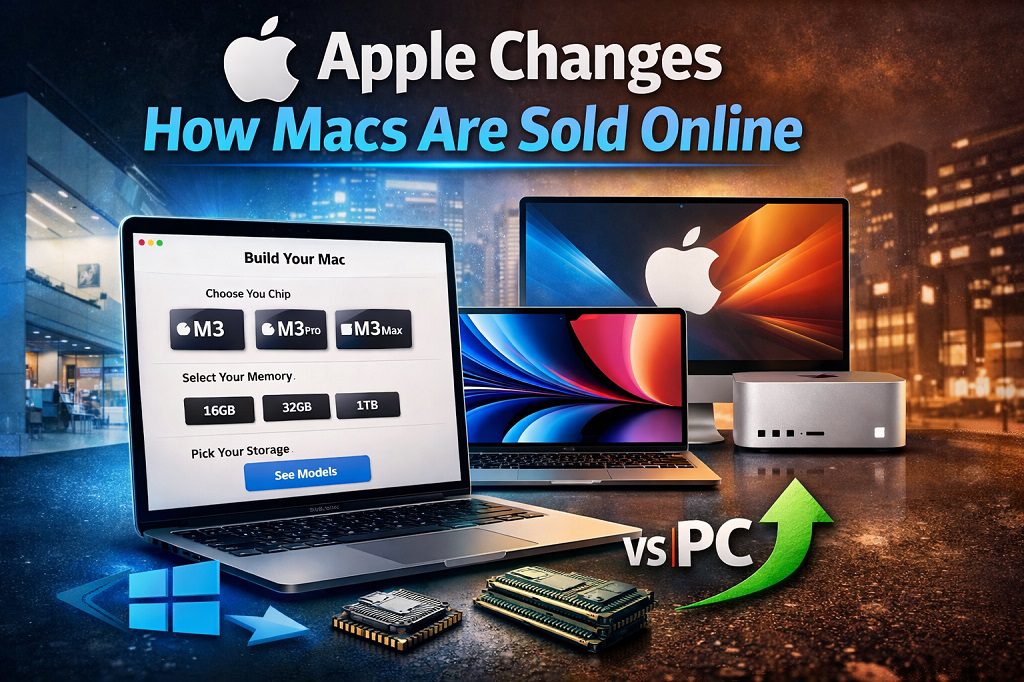
Apple Changes How Macs Are Sold Online, marking one of the most significant updates to Apple’s e-commerce experience in recent years. The company has officially revamped the Mac and MacBook purchase flow on its website, allowing customers to choose key components—such as chip configuration, memory, and storage—before selecting the final model. This strategic shift reshapes how users interact with Apple’s Mac lineup and signals a competitive response to Windows PC manufacturers that have long offered flexible, configuration-first purchasing models.
Key Takeaways
Apple now allows buyers to select Mac components before choosing a specific model, creating a more customizable shopping experience. This change strengthens Apple’s competitive stance against Windows PC OEMs, improves user clarity during purchasing, and reflects Apple’s growing confidence in its unified Apple Silicon ecosystem.
Apple Changes How Macs Are Sold Online: What Exactly Has Changed?
Until now, Apple’s Mac buying experience followed a rigid model-first approach. Customers would choose a MacBook Air, MacBook Pro, or Mac mini first, then upgrade RAM, storage, or processor afterward. With this update, Apple Changes How Macs Are Sold Online by flipping that flow entirely.
New Configuration-First Purchase Flow
Instead of starting with a product, buyers now begin with:
Apple Silicon chip (M2, M3, M3 Pro, etc.)
Memory (RAM)
Storage capacity
Performance tier (basic, advanced, pro)
Once these selections are made, Apple dynamically recommends the best Mac models that match those specifications.
Why This Matters
This approach:
Reduces confusion for non-technical users
Helps buyers avoid overpaying for unnecessary upgrades
Aligns Apple’s store experience with modern PC-building logic
It also subtly shifts attention away from traditional model names and toward performance needs, which benefits Apple’s unified chip strategy.
Why Apple Made This Strategic Move Now
Apple rarely makes dramatic changes to its online store without strong business reasons. This shift reflects multiple underlying trends.
Apple Silicon Maturity
With Apple Silicon now powering every Mac, Apple no longer needs to differentiate devices by architecture. Whether it’s a MacBook Air or Mac Studio, performance scales logically across chips.
This allows Apple to sell capability first, device second.
Rising Competition from Windows OEMs
Windows PC brands like Dell, HP, Lenovo, and ASUS have long allowed users to:
Pick CPU → RAM → Storage
Compare performance tiers instantly
Customize devices extensively
By changing how Macs are sold online, Apple closes a long-standing competitive gap.
Better Conversion and Fewer Returns
Industry analysts believe this update will:
Reduce buyer’s remorse
Lower return rates
Increase customer satisfaction
When users clearly understand what they’re buying, they’re less likely to feel misled.

How This Impacts the Mac Market
A Shift Away From Model-Driven Marketing
MacBook Air vs MacBook Pro comparisons may become less important than:
Entry-level vs power-user configurations
Battery-focused vs performance-focused setups
This could fundamentally change how consumers talk about Macs online.
Increased Price Transparency
Apple has often been criticized for expensive upgrades, especially RAM and SSDs. With the new system:
Users see pricing differences upfront
Upgrade costs feel more justified
Budget planning becomes easier
Pressure on Windows PC OEMs
Ironically, Apple’s improved purchasing flow may now outperform many Windows OEM websites, which are often cluttered, confusing, or overloaded with SKUs.
Apple Changes How Macs Are Sold Online and Its Impact on Buyers
For Casual Users
Easier decision-making
Clear recommendations
Less technical jargon
For Power Users
Faster access to high-performance builds
Better visibility into chip differences
Cleaner comparison experience
For Businesses and Enterprises
Simplified bulk purchasing
Easier standardization of employee devices
Clear performance tiers for IT teams
This change is especially beneficial for first-time Mac buyers switching from Windows.
SEO and E-Commerce Implications for Apple
Improved User Experience Signals
From an SEO perspective, Apple’s new purchase flow:
Increases time on page
Reduces bounce rates
Encourages deeper interaction
These signals indirectly support stronger organic visibility.
More Search-Friendly Product Pages
Component-based filtering allows Apple to:
Target long-tail search queries
Rank for performance-specific keywords
Improve internal linking across Mac pages
Example searches this supports:
“Best Mac for video editing”
“Mac with 32GB RAM Apple Silicon”
“Apple M3 Pro Mac options”
How This Compares to Windows PC Buying Experiences
| Feature | Apple (New) | Windows OEMs |
|---|---|---|
| Component-first selection | ✅ Yes | ✅ Yes |
| Clean UI | ✅ Yes | ❌ Often cluttered |
| Unified chip architecture | ✅ Yes | ❌ Multiple vendors |
| Performance-based recommendations | ✅ Yes | ⚠️ Limited |
Apple’s edge now lies in simplicity + performance clarity, not just branding.
Potential Downsides of the New System
While the change is largely positive, there are a few concerns.
Reduced Emotional Appeal
Some buyers enjoy browsing iconic products like “MacBook Pro” directly. Starting with components may feel less exciting to brand-loyal customers.
Learning Curve for Existing Users
Long-time Apple customers accustomed to the old flow may need time to adjust.
Limited Customization Compared to PCs
Despite improvements, Apple still:
Doesn’t allow GPU swaps
Locks RAM and storage upgrades post-purchase
So full PC-level customization remains exclusive to Windows.
What This Means for Apple’s Future Mac Strategy
This update hints at a larger shift in how Apple views Macs:
Macs as performance tools, not just product lines
Apple Silicon as the core selling point
Simplified buying across consumer and professional segments
We may soon see:
Fewer Mac models
Clearer performance tiers
Subscription-like hardware upgrade paths
Frequently Asked Questions (FAQs)
What does “Apple Changes How Macs Are Sold Online” mean?
It refers to Apple’s updated Mac buying process, where customers now choose components like chip, RAM, and storage before selecting a specific Mac model.
Can I still buy a MacBook the old way?
Yes, Apple still allows browsing by product category, but the new component-first flow is now the primary and recommended experience.
Does this make Macs cheaper?
Not directly, but it improves price transparency and helps users avoid unnecessary upgrades, potentially saving money.
How does this affect Windows PC competition?
It makes Apple more competitive by matching (and in some ways surpassing) the flexible purchasing options offered by Windows PC manufacturers.
Is this change available worldwide?
The rollout is global, though some regions may see minor UI differences during the transition phase.
Will Apple expand customization further?
While Apple hasn’t confirmed deeper customization, this change suggests future flexibility—especially as Apple Silicon continues to evolve.
Final Thoughts
Apple’s decision to overhaul its Mac buying experience isn’t just a UI update—it’s a strategic statement. By focusing on performance needs rather than product labels, Apple is modernizing how consumers choose computers and redefining competition in the Mac vs Windows ecosystem.

