

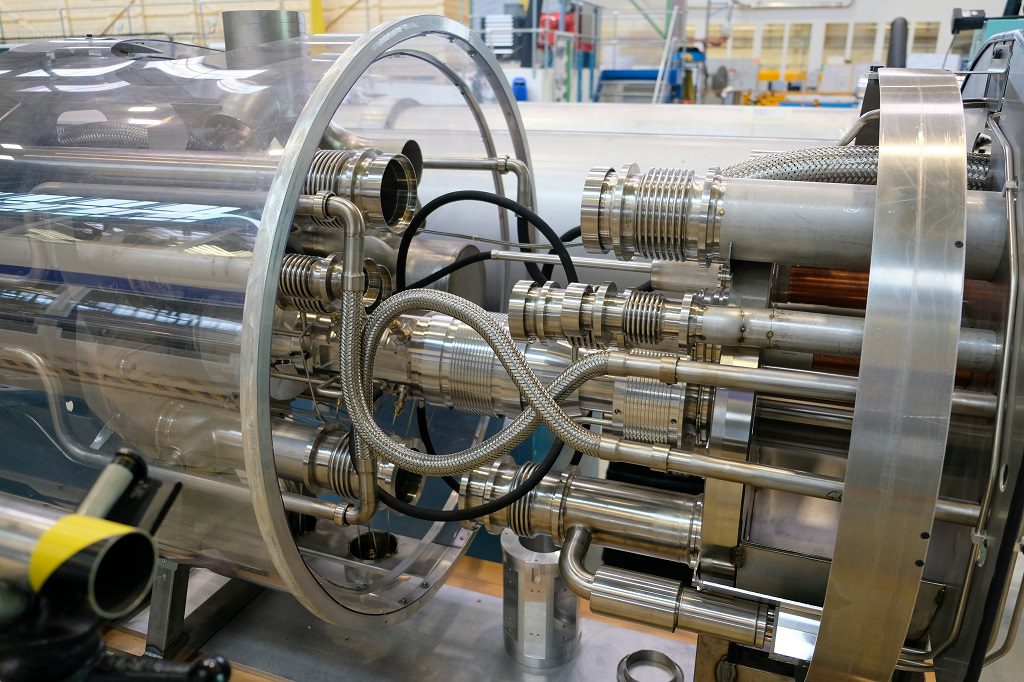
Bengaluru Quantum Internet Node, launched on July 25, 2025, marks India’s first step toward a quantum internet. Hosted at the Indian Institute of Science (IISc), this milestone positions Bengaluru as a hub for quantum communication under India’s National Quantum Mission (NQM). The node, developed with the Raman Research Institute (RRI) and Centre for Development of Telematics (C-DOT), achieved secure data transfer using quantum key distribution (QKD) over a 1-km free-space link. This breakthrough signals India’s ambition to lead in quantum technology globally.
Key Takeaways
- Bengaluru Quantum Internet Node is India’s first, launched at IISc on July 25, 2025.
- Uses quantum key distribution for unbreakable encryption over a 1-km free-space link.
- Part of the $720M National Quantum Mission to advance quantum communication.
- Positions Bengaluru as a global hub for quantum technology innovation.
- Supports applications in defense, finance, and telecom with secure data transfer.
What Is the Bengaluru Quantum Internet Node?
The Bengaluru Quantum Internet Node is a pioneering facility for quantum communication. Unveiled at IISc, it leverages quantum key distribution (QKD) to enable ultra-secure data transmission. Unlike traditional internet, it uses quantum entanglement to ensure encryption that’s theoretically unbreakable. The node achieved a secure key rate of 240 bits per second with a quantum bit error rate below 7% over a 1-km free-space link.
This initiative aligns with India’s National Quantum Mission (NQM), launched in 2023 with $720M funding. The node is a collaboration between IISc, RRI, and C-DOT, showcasing India’s growing quantum ecosystem. It aims to lay the foundation for a nationwide quantum network by 2030.
Contents
Key Features of the Node
| Feature | Description |
|---|---|
| QKD Technology | Uses entangled photons for secure key exchange. |
| Free-Space Link | Transmits data over 1 km without optical fibers. |
| Error Rate | Maintains quantum bit error rate below 7%. |
| Applications | Supports defense, finance, and telecom sectors. |
| Scalability | Designed for future multi-node quantum networks. |
Why Quantum Communication Matters
Quantum communication uses principles of quantum mechanics, like entanglement, to secure data. Traditional encryption can be hacked with advanced computing. Quantum systems detect eavesdropping instantly, as any interference disrupts the quantum state. The Bengaluru Quantum Internet Node demonstrates this with QKD, ensuring data privacy for critical sectors.
India’s focus on quantum networks addresses rising cybersecurity threats. A 2025 report estimated global cybercrime costs at $10.5 trillion annually. Quantum technology offers a solution, making Bengaluru’s node a strategic asset for national security and economic growth.
Benefits of Quantum Communication
- Unbreakable Encryption: Quantum states collapse if intercepted.
- Real-Time Security: Detects eavesdropping instantly.
- Global Reach: Enables secure satellite-based communication.
- Versatility: Supports defense, banking, and telecom applications.
The Technology Behind the Node
The Bengaluru Quantum Internet Node relies on quantum key distribution. It uses entangled photons to create secure keys for data encryption. The 1-km free-space link, tested on IISc’s campus, marks India’s farthest cable-free QKD transmission. Led by Prof. Arindam Ghosh at IISc, the project integrates photonic technologies for scalable networks.
How QKD Works
- Entanglement: Pairs of photons are linked, sharing quantum states.
- Transmission: Photons travel through air to exchange keys.
- Verification: Any interception alters the quantum state, alerting users.
- Encryption: Keys secure data with unbreakable codes.
Role of Bengaluru in Quantum Innovation
Bengaluru is India’s quantum technology hub. IISc, RRI, and startups like QNu Labs drive advancements. The city hosts the Quantum Research Park (QuRP), funded with $5.8M by Karnataka’s government for phase two in 2025. QuRP fosters skill development and industry partnerships, strengthening Bengaluru’s role in the global quantum ecosystem.
Bengaluru’s Quantum Institutions
| Institution | Contribution |
|---|---|
| IISc | Hosts Bengaluru Quantum Internet Node and QuRP. |
| RRI | Advances QKD and quantum sensing research. |
| C-DOT | Develops telecom-grade quantum solutions. |
| QNu Labs | Builds quantum-safe communication chips. |
National Quantum Mission’s Impact
Launched in 2023 with $720M, the NQM aims to make India a quantum leader by 2030. It funds four Thematic Hubs (T-Hubs) for computing, communication, sensing, and materials. The Bengaluru Quantum Internet Node is a key NQM milestone, supporting goals like satellite-based QKD and multi-node networks.
NQM Objectives
- Research: Fund 100+ quantum research institutes.
- Commercialization: Support startups like QpiAI and QNu Labs.
- Infrastructure: Build T-Hubs for collaborative innovation.
- Workforce: Train 10,000 quantum professionals by 2030.
Applications of the Bengaluru Quantum Internet Node
The node enables secure communication for critical sectors. Its quantum key distribution ensures data protection in real-time applications. Defense, finance, and telecom stand to benefit most, with potential for a future quantum internet connecting global nodes.
Key Applications
- Defense: Secures military communications against cyber threats.
- Finance: Protects transactions with quantum encryption.
- Telecom: Enables secure 6G and cloud networks.
- Healthcare: Safeguards sensitive medical data transfers.
Industry and Startup Involvement
Bengaluru’s quantum ecosystem thrives on collaboration. Startups like QNu Labs develop QKD-based chips for satellite and drone communications. QpiAI, backed by $32M, integrates AI with quantum computing for enterprise solutions. These efforts, supported by NQM, bridge academia and industry.
Leading Quantum Startups
- QNu Labs: Quantum-safe chips for secure communications.
- QpiAI: Develops 25-qubit quantum computer “Indus.”
- Quan2D Technologies: Builds single-photon detectors for QKD.
- Pristine Diamonds: Creates diamond-based quantum sensors.
Challenges in Quantum Communication
The Bengaluru Quantum Internet Node faces hurdles. Scaling free-space QKD to longer distances requires advanced optics. Hardware fabrication lags due to reliance on foreign suppliers. Workforce shortages also hinder progress, with only 1,200 quantum professionals in India in 2025.
Key Challenges
- Distance: Free-space QKD limited to 1 km currently.
- Hardware: Dependence on imported quantum components.
- Talent: Shortage of skilled quantum engineers.
- Funding: Limited private investment in quantum tech.
Global Context and Competition
India’s node follows global advancements. China’s 4,600-km quantum network, launched in 2021, set a benchmark. The U.S. aims for a quantum internet by the mid-2030s. Bengaluru’s node positions India to compete, with plans for satellite-based QKD by 2030.
Global Quantum Milestones
| Country | Achievement | Year |
|---|---|---|
| China | 4,600-km quantum network | 2021 |
| India | 1-km free-space QKD node | 2025 |
| U.S. | Plans for quantum internet | 2035 |
| Europe | Quantum internet testbeds | 2024 |
Future of the Bengaluru Quantum Internet Node
India aims to scale the node into a multi-node network by 2030. Collaborations with ISRO target satellite-based QKD for long-distance links. Chip-scale QKD, funded by MeitY, will enable cost-effective deployments. The node could anchor a quantum internet, revolutionizing global communication.
Future Goals
- Satellite QKD: Secure links over hundreds of kilometers.
- Chip-Scale QKD: Miniaturized systems for telecom integration.
- Multi-Node Networks: Connect cities like Delhi and Chennai.
- Global Leadership: Position India as a quantum tech hub.
Industry Reactions and Sentiment
The launch sparked buzz on X, with users calling it a “quantum leap for India.” @TechBit praised Bengaluru’s role as a tech hub. @QuantumGuru noted the node’s potential for cybersecurity. Some expressed concerns about funding and scalability, but optimism prevails.
What Experts Say
- @LDNQuantum: “Bengaluru’s node is a game-changer for secure communication.”
- Prof. Arindam Ghosh: “This sets the stage for India’s quantum future.”
- The Hindu: “A milestone in India’s quantum era.”
How the Node Benefits Society
The Bengaluru Quantum Internet Node enhances cybersecurity and innovation. It protects sensitive data in banking and healthcare. It fosters job creation, with NQM targeting 10,000 quantum jobs by 2030. The node also inspires STEM education, drawing students to quantum technology.
Societal Impacts
- Security: Shields data from cyber threats.
- Innovation: Drives R&D in quantum networks.
- Jobs: Creates high-skill tech roles.
- Education: Boosts interest in quantum science.
Getting Involved with Quantum Technology
Students and professionals can join India’s quantum ecosystem through NQM programs like Q Daksha and Q Karyashala. Startups can apply for NQM grants up to $3.5M. Attending Quantum India Bengaluru 2025, set for July 31–August 1, offers networking with global leaders.
Steps to Engage
- Join Programs: Enroll in IISc’s quantum training.
- Attend QIB 2025: Network at Hilton Bengaluru.
- Apply for Grants: Seek NQM funding for startups.
- Collaborate: Partner with IISc or RRI on projects.
Summary
The Bengaluru Quantum Internet Node, launched on July 25, 2025, at IISc, is India’s first step toward a quantum internet. Using quantum key distribution, it achieved secure data transfer over a 1-km free-space link. Part of the $720M National Quantum Mission, it positions Bengaluru as a global quantum technology hub. The node supports defense, finance, and telecom with unbreakable encryption. Challenges like hardware and talent shortages persist, but plans for satellite QKD and multi-node networks signal a bright future. India’s quantum leap could redefine secure communication globally.
FAQs
- What is the Bengaluru Quantum Internet Node?
India’s first quantum communication facility, using QKD for secure data transfer. - When was the node launched?
July 25, 2025, at IISc in Bengaluru. - What technology powers the node?
Quantum key distribution with entangled photons over a 1-km free-space link. - What is the National Quantum Mission?
A $720M initiative to advance quantum technology in India by 2030. - Who developed the Bengaluru node?
IISc, RRI, and C-DOT, with funding from NQM and DRDO. - What are the node’s applications?
Secure communication for defense, finance, telecom, and healthcare. - What challenges does the node face?
Scaling QKD, hardware reliance, and workforce shortages. - How does India compare globally in quantum tech?
Trails China’s 4,600-km network but leads with 2025 free-space QKD. - What’s next for the Bengaluru node?
Satellite-based QKD and multi-node networks by 2030. - How can I get involved in quantum tech?
Join NQM programs, attend QIB 2025, or apply for startup grants.
STAY AHEAD OF THE CURVE WITH THE LATEST TECH INSIGHTS AND UPDATES! FOR MORE TECH-RELATED NEWS, VISIT TECHBEAMS.

